
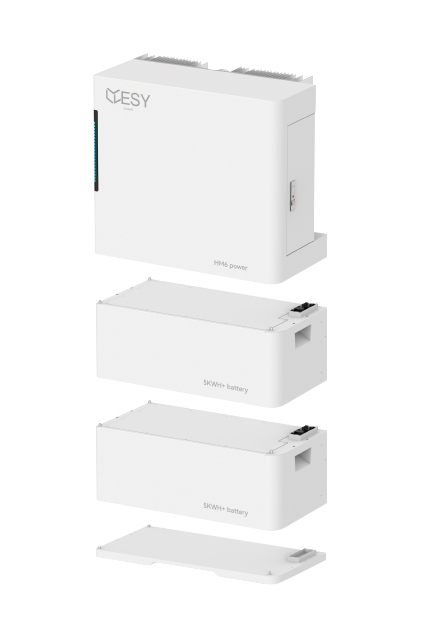
A well-matched ESS should be selected according to solar generation, electricity usage patterns, and backup requirements rather than battery size alone. Residential systems usually range from 5–30 kWh, commercial projects often use 50 kWh to several MWh, and utility applications can exceed 100 MWh. A suitable ESS combines battery capacity, inverter output, safety functions, and energy management software to achieve higher solar utilization, longer backup time, and better lifecycle performance.
Solar and energy storage systems are increasingly installed together because electricity generation and consumption rarely happen at the same time. In 2024, global stationary battery storage deployments exceeded 100 GWh, with residential and commercial installations expanding in markets such as the United States, Germany, Australia, and Japan.
A solar array may produce its highest output between 10 a.m. and 3 p.m., while many buildings reach their highest electricity demand after 5 p.m. Without storage, part of the solar electricity may be exported to the grid at lower rates instead of being used locally.
A typical 10 kW residential PV system can generate around 35–50 kWh per day under suitable weather conditions. If daytime consumption uses only 40% of this electricity, an ESS can store the remaining energy for evening use.
The first step in ESS selection is measuring the difference between solar production and electricity consumption. This determines the required battery capacity and prevents oversized or undersized systems.
| Application | Typical PV Size | Common ESS Capacity |
|---|---|---|
| Residential home | 5–15 kW | 10–30 kWh |
| Small business | 20–200 kW | 50–500 kWh |
| Commercial building | 200 kW–2 MW | 500 kWh–5 MWh |
| Industrial facility | 2 MW+ | 5 MWh+ |
Battery capacity should match the amount of electricity that needs to be shifted from solar hours to evening or backup periods. A 30 kWh battery may be suitable for a household with moderate electricity use, while a commercial building with refrigeration, HVAC, and lighting loads may require several hundred kWh.
The relationship between stored energy and backup duration depends on both battery capacity and load power. A larger battery does not automatically provide longer operation if the inverter output is too low.
For example:
| Parameter | Example Value |
|---|---|
| Critical load | 40 kW |
| Backup duration | 8 hours |
| Inverter efficiency | 92% |
| Required battery size | About 348 kWh |
The same calculation method applies to different facilities, but the selected backup loads should be reviewed carefully. Many buildings do not need to power every electrical device during an outage.
A backup system designed for essential circuits can reduce required battery capacity by 30%–70% compared with supplying the entire building.
This approach is widely used in residential homes, retail stores, healthcare facilities, and small manufacturing sites where continuous power is required for selected equipment.
After battery capacity is determined, inverter power selection becomes the next consideration. The inverter controls how much electricity can be delivered at one time, which affects whether the ESS can start motors, support HVAC equipment, or maintain sensitive electronics.
A system with a 500 kWh battery and a 100 kW inverter can theoretically operate for approximately 5 hours at full output. However, if the facility requires 200 kW during peak periods, the battery capacity alone cannot solve the problem.
Important inverter parameters include:
-
Continuous output power
-
Short-term overload capability
-
Three-phase operation
-
Power factor range
-
Harmonic performance
-
Grid connection standards
Commercial equipment often requires higher starting power because motors and compressors may temporarily draw 150%–300% of their rated power during startup.
Battery chemistry also affects ESS selection. Lithium iron phosphate (LFP) batteries are widely used in stationary storage because they provide long cycle life and stable thermal performance.
Typical LFP ESS specifications include:
| Parameter | Common Range |
|---|---|
| Cycle life | 5,000–10,000 cycles |
| Round-trip efficiency | 90%–95% |
| Usable depth of discharge | 80%–95% |
| Warranty period | 10 years |
| Operating temperature | -20°C to 50°C |
A system operating one full cycle per day may complete approximately 365 cycles annually. After 10 years, the battery may experience around 3,650 cycles, making cycle life and warranty conditions important factors during product comparison.
The battery system is only one part of the ESS package. Modern systems combine battery modules, battery management systems (BMS), power conversion systems (PCS), and energy management systems (EMS).
The BMS monitors cell voltage, temperature, current, and state of charge. Advanced systems measure individual cell conditions and provide protection against abnormal operation.
Many commercial ESS manufacturers provide remote monitoring platforms that collect operating data every few seconds and allow users to review system status through cloud-based interfaces.
Solar integration methods also affect system efficiency. Two common architectures are DC-coupled and AC-coupled systems.
| System Type | Advantages | Common Application |
|---|---|---|
| DC-coupled | Higher conversion efficiency | New solar installations |
| AC-coupled | Easier retrofit | Existing PV systems |
DC-coupled systems connect solar panels and batteries on the DC side, reducing some conversion losses. AC-coupled systems use separate solar inverters and battery inverters, making them easier to install in existing buildings.
For example, a commercial building that already has a 500 kW PV system may choose an AC-coupled ESS because the existing solar equipment does not need major replacement.
Energy management software has become increasingly important as electricity pricing structures change. Many countries use time-of-use tariffs, where electricity prices vary throughout the day.
A building may charge batteries when electricity prices are low and discharge them during expensive periods.
Example:
| Time Period | Electricity Price |
|---|---|
| Night | $0.08/kWh |
| Daytime peak | $0.28/kWh |
A 200 kWh ESS shifting 120 kWh per day could reduce electricity costs by approximately:
120 × ($0.28 - $0.08) = $24/day
Over 300 operating days, the annual difference could reach around $7,200 before considering efficiency losses and maintenance costs.
Different markets require different ESS designs. Residential users usually focus on compact size, safety, and backup capability. Commercial users often focus on demand reduction and electricity cost management. Industrial users require higher power ratings, advanced controls, and longer operating periods.
Residential systems commonly include:
-
5–30 kWh batteries
-
Hybrid inverters
-
Mobile monitoring applications
-
Backup circuits
Commercial systems often include:
-
50 kWh–5 MWh storage
-
Three-phase power systems
-
EMS integration
-
Peak demand management
Industrial systems may include:
-
Containerized battery units
-
Megawatt-scale PCS
-
Advanced cooling systems
-
Grid support functions
Companies evaluating suppliers should compare product specifications, certifications, service capability, and system compatibility. The ESYsunhome energy storage product range provides different ESS configurations designed for residential and commercial solar applications.
Temperature conditions also influence ESS performance. Battery capacity decreases in very cold or very hot environments, so thermal management should be considered during system selection.
For example, lithium batteries may experience reduced charging performance below 0°C, while continuous operation above 45°C can accelerate aging. Systems installed outdoors often require IP-rated enclosures, heating systems, or cooling equipment.
Safety design is another important evaluation area. Modern ESS products commonly include:
-
Cell monitoring
-
Over-voltage protection
-
Over-current protection
-
Thermal sensors
-
Fire safety systems
-
Remote fault alarms
International projects often require compliance with standards such as IEC 62619, UL 9540, and UN 38.3 depending on the installation location.
Before purchasing an ESS, buyers should review several technical questions:
| Evaluation Item | Questions |
|---|---|
| Battery size | Does capacity match actual electricity demand? |
| Output power | Can the inverter support peak equipment loads? |
| Solar compatibility | Can the system connect with existing PV equipment? |
| Warranty | What capacity remains after 10 years? |
| Monitoring | Is remote operation available? |
| Safety | Are protection functions included? |
A properly selected ESS improves solar utilization, provides backup electricity, and supports better electricity cost management. The selection process should be based on measured load data, solar production records, and expected operating conditions rather than battery capacity alone.